Rapid Insights: ‘The Beauty’ Frames Wellness Obsession as Ryan Murphy’s Next Horror Engine

Ryan Murphy’s return to FX body horror arrived with record-breaking anticipation: the trailer amassed 190 million views in seven days, making it the network’s most-viewed trailer ever. The 11-episode series follows FBI agents investigating a sexually transmitted virus that grants physical perfection before causing victims to explosively combust, leaning into Murphy’s signature strengths: A-list ensemble casts, lavish production design, and a provocative premise that uses body horror to interrogate our culture’s increasingly extreme pursuit of physical perfection.

Here’s what you need to know about The Beauty:

Vault AI uses index scores to describe the impact a given story/theme/element will have on specific KPIs: 
≤79 Disappointing  80-89 Challenging  90-109 Average  110-119 Promising  120+ Outstanding

Who’s watching this show? 
More age-balanced than some Murphy horror. The Beauty draws 63% aged 30+, aligning with American Horror Story (63% aged 35+) and Nip/Tuck (59% aged 35+) rather than Grotesquerie‘s heavily older audience (92% aged 35+) or The Strain (73% aged 35+). The broader age appeal likely reflects the premise: where Grotesquerie leaned into religious horror and The Strain built around vampire mythology, The Beauty‘s “Ozempic culture” satire and wellness-industry critique connect with viewers across generations navigating today’s transformation-obsessed landscape.

Why tune in?
Conspiracy meets chaos. Secret Organization (117) and Chaotic Lifestyle (115) drive initial tune-in, with Based on a Book (115) lending source-material credibility from the 2015 Image Comics series. The FBI investigation structure provides familiar procedural scaffolding while the shadowy “Corporation” villain (Ashton Kutcher) and global conspiracy stakes differentiate it from Murphy’s anthology approach. Where AHS hooks viewers with Haunted House (140) and Evil Spirits (139)The Beauty trades supernatural dread for corporate techno-thriller paranoia, betting that Big Pharma villainy resonates more than ghosts in 2026.

What keeps them watching?
Unhinged perspectives. Eccentric Character POV (120) leads all engagement drivers, reflecting the series’ multiple viewpoint structure: basement-dwelling incel Jeremy, billionaire sociopath Byron Forst, and the assassin enforcing the cover-up. Power Struggle (111) and Charisma & Confidence (110) sustain momentum as characters compete for control of the virus. The Strain relied on Human/non-Human Relationship (160) and Vampires (153) for its outbreak thrills; The Beauty substitutes monster mythology with the more unsettling horror of people voluntarily infecting themselves for vanity.

What does it feel like?
Visceral revulsion, by design. Terror (119) and Disgust (114) define the emotional experience, a marked escalation from Nip/Tuck‘s comparatively tame Disgust (99). Murphy has described the series as one of his most disturbing works, and the data supports it: the show delivers a consistent emotional assault across Vengeance, SurpriseRage, and Aggressiveness (all 112). This isn’t the slow-burn dread of AHS but sustained shock value, aligning with Murphy’s stated goal of making viewers physically uncomfortable while interrogating why we’d sacrifice everything for beauty.

Introducing Genre DNA™


Redefine your understanding of TV subgenres

Introducing Genre DNA™ – TV subgenres redefined by groundbreaking AI analysis to reveal the true drivers of viewership.

See the insights that others can’t

Genre DNA™ goes beyond traditional TV genre classifications by analyzing over 1,000 scripted and unscripted series on both linear and SVOD platforms from the last 5 years.

Each Vault Genre DNA™ report offers a precise analysis of your chosen TV subgenre, uncovering its unique drivers of viewership.

*Publicly released trailers for series are evaluated using Vault’s algorithms – utilizing our proprietary 120K+ story element database alongside viewership performance and other datasets – to identify unique combinations of stories, themes, characters, and genre elements that will drive success.

Stay in the know

Subscribe to get Rapid Insights delivered to your inbox or follow us on LinkedIn

Past Rapid Insights: Miss one? Check out previous issues here

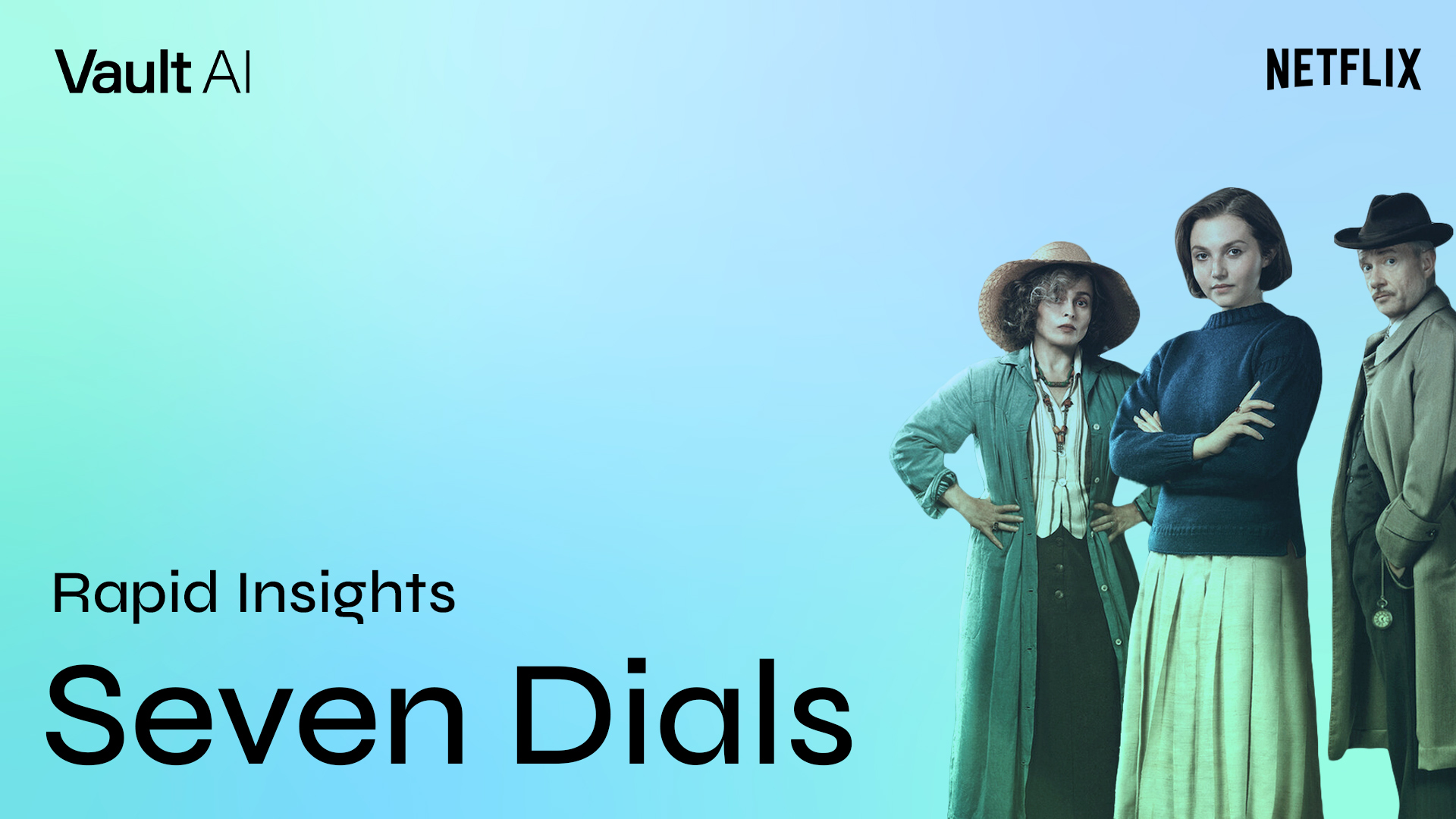
Rapid Insights: ‘Seven Dials’ Reveals Why Mystery Works Better With a Wink

Netflix’s gamble on Agatha Christie’s lesser-known sleuth paid off instantly. Seven Dials hit #2 on the streamer within 24 hours, proving audiences will embrace a new detective franchise built around a determined young woman solving 1920s murders with style and wit. The three-episode format turns what could have been a sluggish ten-hour mystery into a perfectly bingeable romp, and the streamer’s clearly betting Bundle Brent can anchor the Christie universe they’ve been building.

Here’s what you need to know about Agatha Christie’s Seven Dials:

Vault AI uses index scores to describe the impact a given story/theme/element will have on specific KPIs: 
≤79 Disappointing  80-89 Challenging  90-109 Average  110-119 Promising  120+ Outstanding

Who’s pressing play on this period mystery? 
Women, predominantly. Seven Dials pulls 65% female viewers and skews heavily 30+ (78%), notably higher than Poker Face (48% women / 79% aged 30+) and edging out Only Murders in the Building (60% women / 70% aged 30+). The period setting and Bundle’s central role as detective both likely contribute to the strong female appeal.

Why are viewers tuning in?
Betrayals over bodies. Seven Dials‘ top ratings driver is Supportive Relationships (154), and those relationships are what make the eventual betrayals devastating. Bundle investigates alongside her mother (Mother-Child Relationships, 136), her late brother’s friends, and Superintendent Battle, creating bonds that feel genuine before the show systematically destroys them. The series weaponizes Scary Situations (130) and Death of a Loved One (129) to raise the stakes on who Bundle can trust, while Romantic Tension (123) adds another layer of complexity to the investigation.

What’s keeping audiences hooked through all three episodes?
Bundle’s determination under pressure. The show’s top bingeability driver is Strong Female Protagonist (145), and Bundle delivers as a capable detective who refuses to quit. The series deploys Sarcastic Humor (132) through Lady Caterham’s cutting wit, keeping things from getting too heavy while the Emotional Roller Coaster (144) of grief and betrayal maintains real stakes. The three-episode structure creates a genuine Race Against Time (122) with zero filler, keeping the Murder Mystery (122) momentum strong throughout.

What emotional experience is the show delivering?
Thrills that empower. Seven Dials balances intense negative emotions (Surprise, 118; Terror, 118; Fear, 115) with aspirational ones (Awe, 113; Independence, 110), creating an experience where viewers get genuine scares without feeling helpless. Bundle faces real danger but never loses agency, transforming what could be standard thriller anxiety into something more satisfying. It’s fear with a safety net: audiences know Bundle’s scared but also capable of saving herself.

Introducing Genre DNA™


Redefine your understanding of TV subgenres

Introducing Genre DNA™ – TV subgenres redefined by groundbreaking AI analysis to reveal the true drivers of viewership.

See the insights that others can’t

Genre DNA™ goes beyond traditional TV genre classifications by analyzing over 1,000 scripted and unscripted series on both linear and SVOD platforms from the last 5 years.

Each Vault Genre DNA™ report offers a precise analysis of your chosen TV subgenre, uncovering its unique drivers of viewership.

*Publicly released trailers for series are evaluated using Vault’s algorithms – utilizing our proprietary 120K+ story element database alongside viewership performance and other datasets – to identify unique combinations of stories, themes, characters, and genre elements that will drive success.

Stay in the know

Subscribe to get Rapid Insights delivered to your inbox or follow us on LinkedIn

Past Rapid Insights: Miss one? Check out previous issues here

Rapid Insights: ‘His & Hers’ Shows Why One Unreliable Narrator Isn’t Enough

Netflix just dropped a twisted psychological thriller based on Alice Feeney’s novel that’s racing up the streamer’s Top 10 list and has viewers compulsively burning through episodes. Starring Tessa Thompson and Jon Bernthal as estranged spouses who each believe the other is a killer, this limited series delivers unreliable-narrator murder mystery that keeps audiences guessing (and talking) until the final shocking reveal.

Here’s what you need to know about His & Hers:

Vault AI uses index scores to describe the impact a given story/theme/element will have on specific KPIs: 
≤79 Disappointing  80-89 Challenging  90-109 Average  110-119 Promising  120+ Outstanding

Who’s been tuning in for this twisty thriller? 
Women, predominantly. His & Hers pulls 60% female viewers and skews heavily 30+ (83%), though it’s slightly less female-skewing than most mysteries in this category, likely because Jon Bernthal’s detective Jack shares equal narrative weight with Tessa Thompson’s Anna. For comparison, Stay Close (67% women / 72% aged 30+) and Peacock’s All Her Fault (65% women / 77% aged 35+) both center more heavily on female protagonists.

Why are viewers pressing play?
For the darkness hiding beneath small-town civility. His & Hers‘ top ratings driver is Dark Secrets (139), and the show delivers in spades as both Anna and Jack wade through a minefield of lies about their hometown, their failed marriage, and the string of murdered women who all knew them both. The series explores Work-Life Balance (129) with a dangerous twist (Anna chooses to report on murders tied to her own past, while Jack investigates crimes that point to his seeming culpability). Audiences are drawn to the show’s promise of Hidden Truth (122), watching each episode methodically peel back another layer of deception in what seemed like an idyllic Georgia town.

What’s keeping audiences hooked episode after episode?
The he-said, she-said structure. His & Hers employs dueling Voice-Over Narration (120) from both Anna and Jack, letting viewers experience the same investigation through two completely unreliable perspectives (each hiding secrets, each suspecting the other). The Small Town Life (118) setting of Dahlonega creates the claustrophobic pressure cooker essential to great thrillers, where everybody knows everybody’s business and old wounds fester for decades. The brutal Murder (117) in the premiere kicks off a chain of killings all connected to Anna’s high school past, while the Estranged Relationship (116) between the two leads adds delicious tension as they’re forced into proximity despite their bitter separation. Personal Revelations (114) about the victims (all women from Anna’s former mean-girl clique) drop like bombs, making it nearly impossible to stop watching as motives multiply and the body count climbs.

What gives His & Hers staying power beyond season one?
The procedural framework and shifting blame game. The show leans heavily into CSI (122)-style investigation, giving it the episodic structure networks love for multi-season runs. The Accused POV (112) keeps things fresh by constantly rotating which character seems guilty (Anna, Jack, and multiple others all look like killers at different points), a narrative trick that could sustain multiple storylines. The Lifestyle Change (110) both protagonists undergo (abandoning their carefully rebuilt lives to confront buried trauma) offers rich territory for future seasons exploring how they navigate their hometown’s shattered trust. Unlike Big Little Lies‘ laser focus on Female Friendship (155) or Stay Close‘s straightforward Serial Killer (160) hunt, His & Hers builds a revenge narrative with enough unanswered questions and damaged relationships to fuel seasons beyond the initial mystery’s resolution.

Introducing Genre DNA™


Redefine your understanding of TV subgenres

Introducing Genre DNA™ – TV subgenres redefined by groundbreaking AI analysis to reveal the true drivers of viewership.

See the insights that others can’t

Genre DNA™ goes beyond traditional TV genre classifications by analyzing over 1,000 scripted and unscripted series on both linear and SVOD platforms from the last 5 years.

Each Vault Genre DNA™ report offers a precise analysis of your chosen TV subgenre, uncovering its unique drivers of viewership.

*Publicly released trailers for series are evaluated using Vault’s algorithms – utilizing our proprietary 120K+ story element database alongside viewership performance and other datasets – to identify unique combinations of stories, themes, characters, and genre elements that will drive success.

Stay in the know

Subscribe to get Rapid Insights delivered to your inbox or follow us on LinkedIn

Past Rapid Insights: Miss one? Check out previous issues here

Processing...
Thank you! Your subscription has been confirmed. You'll hear from us soon.
Subscribe
Sign up with your email address to receive news and updates.
ErrorHere