Rapid Insights: ‘Reggie Dinkins’ Proves Audiences Want the Fall, Not the Comeback
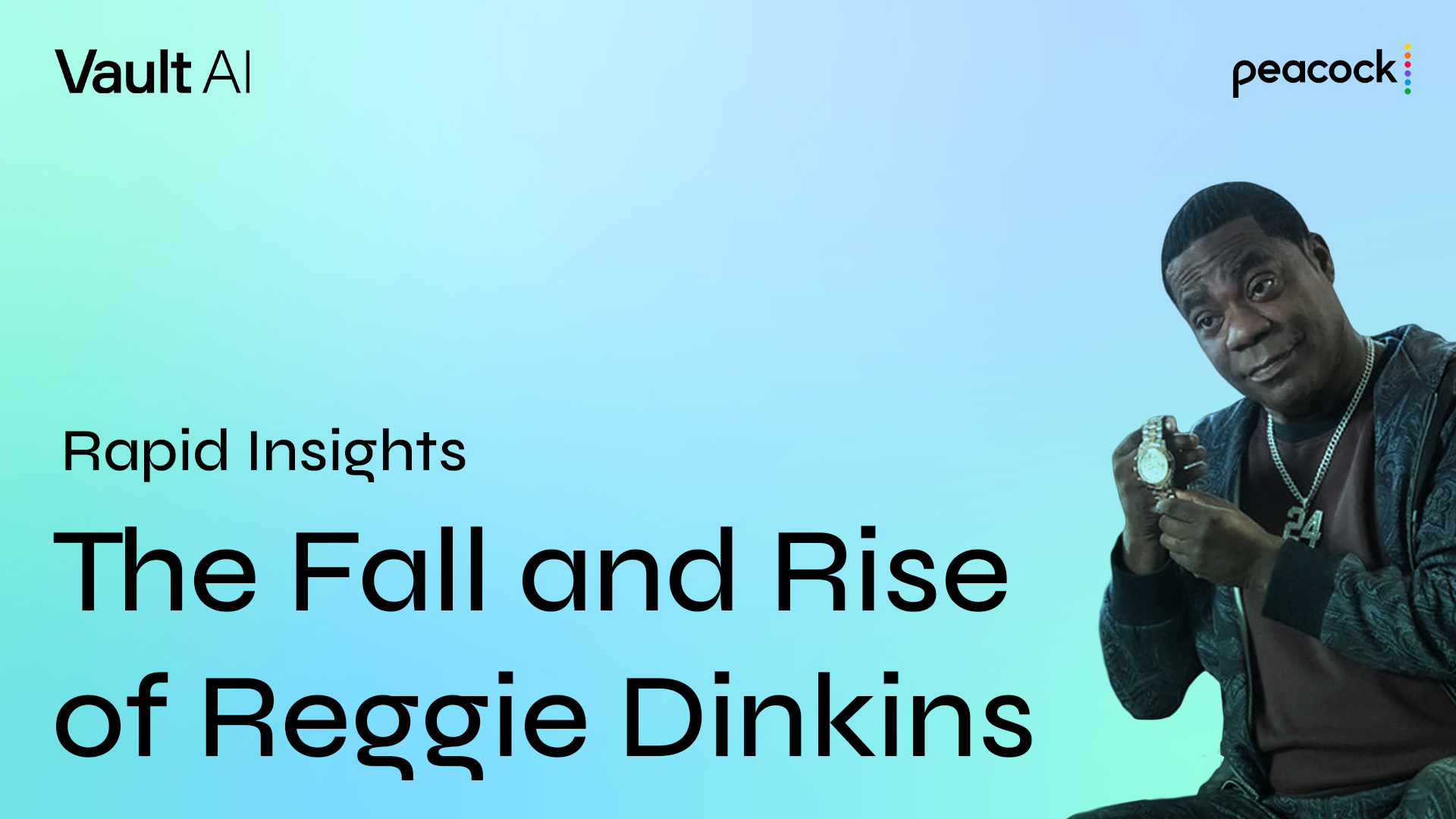
Only the creators of 30 Rock could watch a man detonate his NFL career on live television and think: that’s a comedy. The Fall and Rise of Reggie Dinkins carries the creative DNA of Robert Carlock, Sam Means, and Tina Fey, a team that has always understood how institutions seduce, discard, and look absurd once you’re standing outside them. The show presents itself as a sports comeback story, but its driver profile reveals something sharper: an audience tuning in for family dysfunction, public shame, and a disgraced player’s fight to reclaim his Hall of Fame legacy. It’s working. Reggie Dinkins drew 5.8 million viewers in its debut, the biggest comedy premiere on broadcast in three years.
Here’s what you need to know about The Fall and Rise of Reggie Dinkins:
Vault AI uses index scores to describe the impact a given story/theme/element will have on specific KPIs:
≤79 Disappointing 80-89 Challenging 90-109 Average 110-119 Promising 120+ Outstanding
Who is watching a disgraced NFL star try to rewrite his own story?
An older, evenly split audience. Reggie Dinkins lands at 45% female and 85% aged 35+, tracking closely with Ted Lasso (52% female, 80% 35+) and Stick (47% female, 81% 35+). All three shows wear sports on the surface but broaden their reach through domestic stakes. Family Relationships (157) leads Reggie Dinkins‘ viewership drivers. Ted Lasso edges more female through Feel Good Humor (119) and Dysfunctional Relationship (127), leaning into emotional accessibility over competition. Stick connects through Awkward & Funny Moments (141) and Mentorship (132). The pattern across the comp set: sports comedies reach this demo when the sport is the backdrop and relationships are the hook.
What turns a puff piece into must-watch TV?
The camera won’t blink. Where Ted Lasso leaned on Competitiveness (124) and Stick on Supportive Relationships (134), Reggie Dinkins runs on a rawer engine: the public record of a self-inflicted fall. Public Exposure (News Reports, 140) is the show’s highest bingeability driver, the constant presence of footage that can be replayed, recontextualized, and used against him at any moment. Awkward & Funny Moments (119) and Talking Heads (119) turn that exposure into a rhythm of cringe, confession, and comic release. Arthur Tobin (Daniel Radcliffe), an Oscar winner in his own professional exile, was hired to make a highlight reel. He’s filming something honest instead. Their Unlikely Friendship (112), built on conflicting agendas and a shared need to matter again, is the show’s emotional anchor.
What’s pulling audiences to the couch?
The thrill of watching someone refuse to stop talking. Family (135) dominates Reggie Dinkins‘ emotional profile for viewership, towering over Stick (104) and Ted Lasso (106). But the signature is what surrounds it: Surprise (122) and Terror (122) both score Outstanding, with Aggressiveness (113), Anger (113), and Anticipation (113) all Promising. This isn’t the emotional engine of a feel-good sports comedy. It’s the engine of a show where audiences are leaning forward, waiting for the next unfiltered confession, the next foot-in-mouth moment caught on camera, the next family secret that spills out because a documentary crew happened to be rolling. Ted Lasso ran on optimism and warmth. Reggie Dinkins runs on the electric cringe of a man with no filter and a camera that never stops rolling.
What keeps audiences coming back?
Characters who always have something left to prove. Sports Focus (139) and Road to Redemption (134) anchor the show’s longevity profile. All three comps share the same structural engine: a protagonist who hasn’t earned their place back yet. Stick sustains through Underdogs (137) and Coach-Athlete Relationship (129). Ted Lasso held with Coach-Athlete Relationship (118) and Fish Out of Water (116). What separates Reggie Dinkins is the weight of a known, self-inflicted fall. The show doesn’t need Reggie to reach the Hall of Fame to keep going. It just needs him to keep reaching.
—
Most Popular Rapid Insights
Introducing Genre DNA™

Redefine your understanding of TV subgenres
Introducing Genre DNA™ – TV subgenres redefined by groundbreaking AI analysis to reveal the true drivers of viewership.
See the insights that others can’t
Genre DNA™ goes beyond traditional TV genre classifications by analyzing over 1,000 scripted and unscripted series on both linear and SVOD platforms from the last 5 years.
Each Vault Genre DNA™ report offers a precise analysis of your chosen TV subgenre, uncovering its unique drivers of viewership.
*Publicly released trailers for series are evaluated using Vault’s algorithms – utilizing our proprietary 120K+ story element database alongside viewership performance and other datasets – to identify unique combinations of stories, themes, characters, and genre elements that will drive success.
